vory Coast's 2023 triumph did not look like a coronation. It began with a 4-0 group-stage humiliation by Equatorial Guinea, a result so damaging that the host nation sacked coach Jean-Louis Gasset mid-tournament and replaced him with Emerse Faé, a former player with little senior managerial experience. From there, the team scraped past Senegal on penalties, edged Mali in extra time, survived DR Congo and beat Nigeria 2-1 in the final. The football was rarely clean. The final itself was tense, scrappy and decided by details. The crowd in Abidjan did not demand elegance;it demanded survival. One mistake can define a month. That run explains more about the Africa Cup of Nations than any glossy brochure could. The tournament is not a showcase for flawless football. It is a pressure test. Squads arrive with different fitness levels, coaches have little time together。
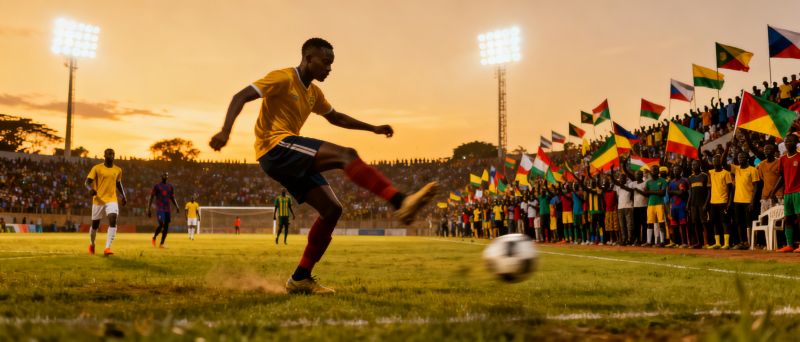
and the crowd turns every match into a referendum on national pride. The best team does not always win. The team that adapts fastest usually does.Since expanding to 24 teams in 2019, the Africa Cup of Nations has become broader and harder to read. Six groups produce a knockout bracket that rewards momentum as much as quality. Format changes have helped: the round of 16 gives more teams a realistic path, and the group stage punishes one bad afternoon without eliminating every contender. Egypt's seven titles and Cameroon's five set the historical standard, but recent editions have spread the honors: Algeria in 2019。Senegal in 2021, Ivory Coast in 2023. That pattern is not random. More countries now export players to Europe's top leagues, and scouting networks have narrowed the talent gap. A squad built around one superstar can be neutralized by a compact side with a clear plan. Cape Verde and Equatorial Guinea have shown how far organization and belief can carry a smaller football nation. They defend with discipline, break quickly and refuse to be overawed. The old hierarchy still matters, but it no longer dictates the script. That is why predictions age badly.The calendar adds another layer of strain. The Africa Cup of Nations sits awkwardly in the European club season, and coaches spend weeks negotiating release dates, injury risks and travel plans. A player can leave his club in January as a squad option and return in February as a hero or a casualty. Clubs complain, federations push back, and players carry the pressure in public. That tension is real, but it is also part of the tournament's character. Matches are played in heat, on pitches that vary from pristine to unpredictable, and in stadiums where the noise never settles. Tactical plans often shrink to set pieces, counterattacks and penalty shootouts. Senegal's 2021 victory was built on years of near misses, not a sudden burst of luck. The same squad lost a final in 2019。then returned with a harder edge. The result is a competition that feels less like a league and more like a series of national emergencies, played in public. This is not a flaw. It is the condition of the competition. The teams that prepare for chaos tend to survive it.
Hosting has become a test of infrastructure as much as football. Morocco's preparations for the 2025 edition have focused on stadiums, transport and security, with the tournament positioned as a statement of regional ambition. That matters. A successful Africa Cup of Nations can leave better roads, training grounds and hospitality systems behind. It can also expose gaps. Ticket prices, travel costs and local media access shape who gets to experience the event, not just who plays in it. Cameroon's 2021 edition, played under strict pandemic controls。showed how quickly a tournament can shift from celebration to logistics. Stadiums were ready;the atmosphere was not. Broadcasters sell the spectacle, but the tournament's real value is often local: a small business near a stadium, a youth team inspired by a visiting squad, a city learning how to host at scale. Those details rarely make highlight reels. They decide whether the tournament leaves a lasting mark or just a month of noise. Those choices are political even when they are presented as technical.
What makes the Africa Cup of Nations compelling is not perfection. It is the friction. A favorite collapses, a substitute becomes a national hero, a coach who was mocked a week earlier gets carried off the pitch. Fans remember the goalkeeper's save, the striker's miss, the coach's sprint down the touchline. The football can be ragged。the scheduling can be frustrating, and the noise around the tournament can overwhelm the matches. Strip that away and you still find something rare: a continental competition where the emotional stakes are visible in every tackle. That is why the tournament keeps producing stories that outlast the trophy. Ivory Coast's 2023 run was chaotic, unlikely and deeply human. The next edition will not need a script. It will have one by the second week.